



Waste Wood Regulations: What Businesses Need to Know
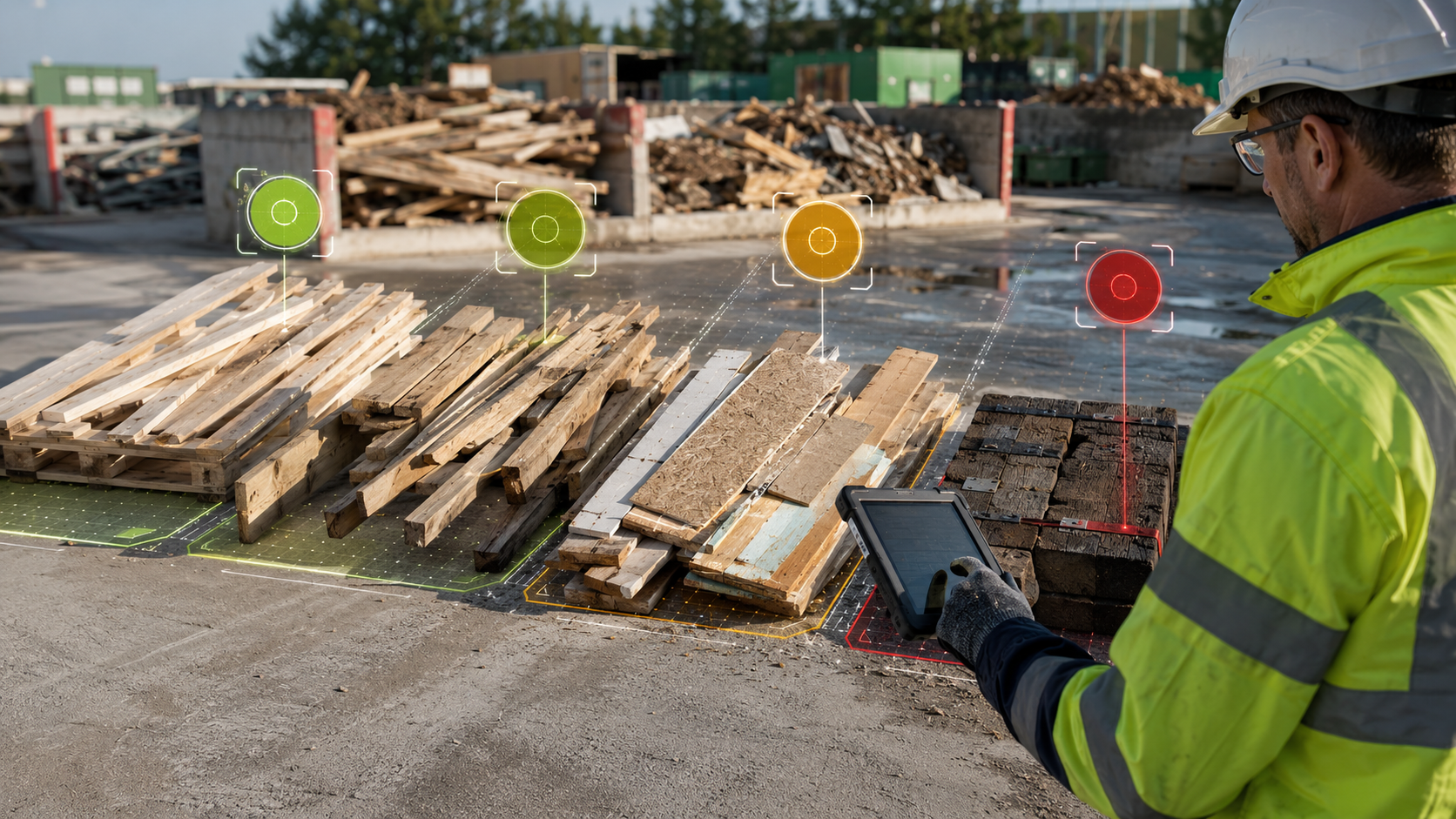
Waste wood from construction, demolition and refurbishment projects must be identified and managed correctly. However, the rules have changed significantly since 2023, and the age of a building no longer determines by itself whether its waste wood should be treated as hazardous.
The important distinction today is between clean untreated wood, treated non-hazardous wood and genuinely hazardous waste wood.
This article describes the regulatory position in England. Different environmental regulators operate in Wales, Scotland and Northern Ireland.
What Changed?
RPS 291 was introduced by the Environment Agency in November 2023 as a temporary measure. It covered ten types of wood from older buildings that were considered potentially hazardous and were commonly referred to as “amber” waste wood.
The position statement allowed these materials to be handled as non-hazardous waste under specified conditions. Those conditions included quarterly sampling and testing.
Following an extensive testing programme, the Environment Agency accepted that hazardous material within the relevant household, construction and demolition waste streams was negligible and continuing to decline.
RPS 291 was therefore withdrawn in September 2024. The timber items previously placed on the amber list can now be moved and processed as non-hazardous waste when they are sent for appropriate recovery, such as panel board manufacture or an Industrial Emissions Directive Chapter IV-compliant biomass facility.
Routine quarterly testing of these former amber items is no longer required.
Is Wood From an Older Building Hazardous?
Not necessarily.
The age of a building may provide useful background information, but wood from a pre-2007 building should not automatically be classified as hazardous.
Painted or coated timber is not automatically hazardous either. Its classification depends on the substances used, their concentration and whether the wood displays hazardous properties.
Waste wood should instead be assessed according to its source, previous use, treatment and condition.
The Wood Recyclers’ Association groups waste wood into four grades according to its source, treatment and appropriate recovery or disposal route.
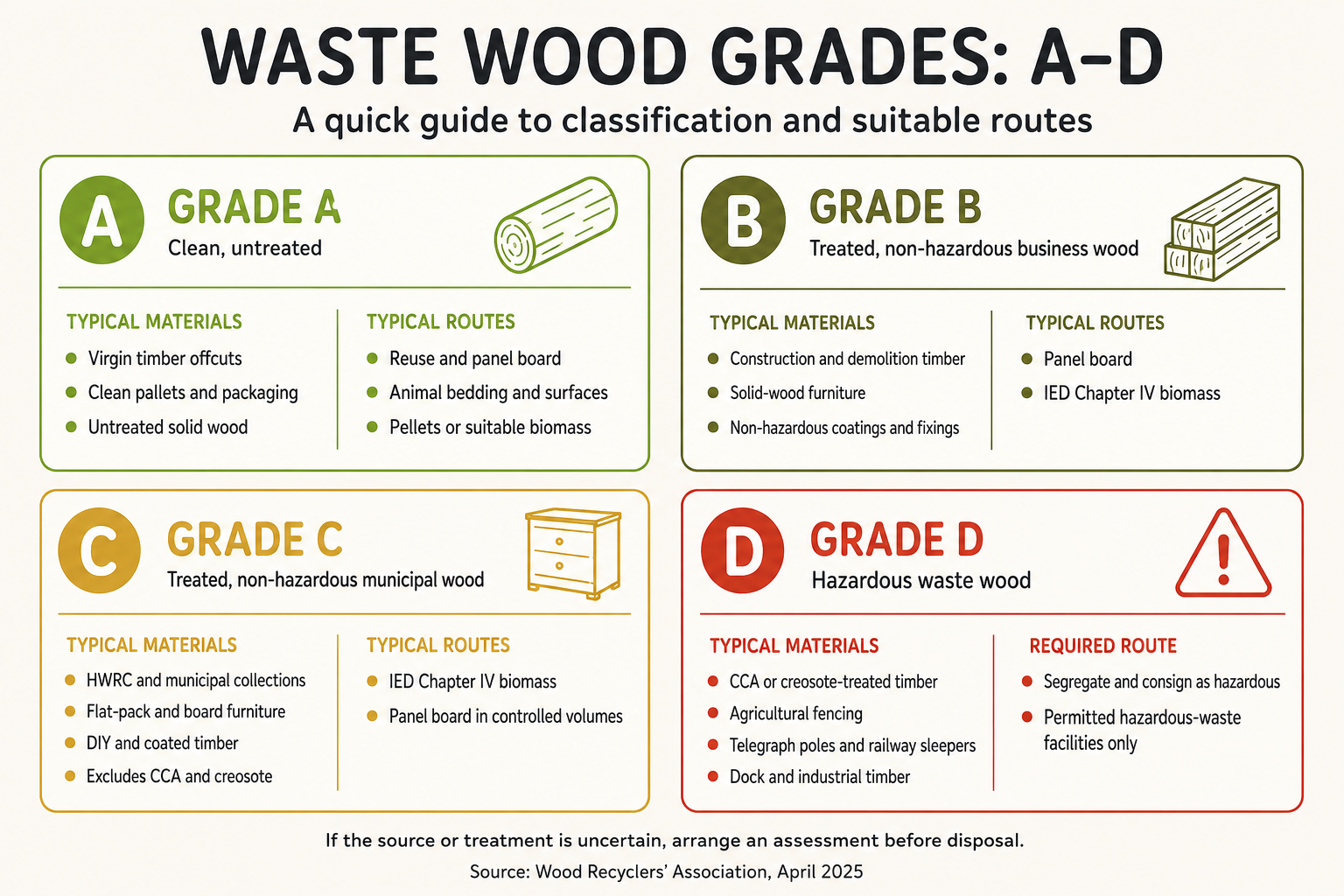
Which Types of Waste Wood May Still Be Hazardous?
Some forms of treated or contaminated timber remain hazardous and require specialist handling.
Typical examples include:
- Wood treated with creosote
- Wood treated with copper chrome arsenic, commonly known as CCA
- Telegraph poles and railway sleepers
- Agricultural fencing treated with hazardous preservatives
- Timber from docks and other hydraulic engineering applications
- Cooling tower timbers and certain other industrial wood
- Wood from boats, carriages and trailer beds
- Timber contaminated by hazardous chemicals or industrial processes
These materials should be separated from non-hazardous wood and transferred only to organisations and facilities authorised to handle hazardous waste.
Waste wood from heavy industrial premises may also require further assessment or testing.
When Might Testing Be Needed?
Although routine quarterly testing is no longer required, testing may still be appropriate when:
- The source of the wood is unknown
- Its previous use cannot be established
- The type of treatment cannot be identified
- It may have come into contact with hazardous chemicals
- It originates from a heavy industrial building or process
- Visual assessment and available records do not provide enough information for an accurate classification
Where testing is needed, it should be undertaken using an appropriate waste wood testing method and interpreted by someone competent in hazardous waste classification.
Your Waste Duty of Care
Businesses that produce, carry, store or manage waste have a legal Duty of Care.
This means taking reasonable steps to ensure that waste is:
- Properly identified and classified
- Stored securely
- Kept separate where different classifications require it
- Described accurately on the relevant documentation
- Collected by an authorised waste carrier
- Taken to a facility permitted to receive it
Non-hazardous waste normally moves under a waste transfer note. Waste classified as hazardous requires the appropriate hazardous waste documentation and must be sent to a suitably authorised facility.
If you are uncertain about the correct classification, seek advice before mixing the wood with other waste streams or arranging collection.
How Red Kite Recycling Can Help
Waste wood classification can be difficult when a project involves older premises, mixed demolition materials or timber of uncertain origin.
Red Kite Recycling can help you:
- Review the types and sources of waste wood produced by your project
- Identify materials that may need further assessment
- Plan suitable segregation and storage arrangements
- Arrange collection by an appropriately authorised carrier
- Select a suitable recycling, recovery or disposal route
- Maintain clear waste documentation and reporting
Good planning reduces the risk of non-compliance, avoids unnecessary hazardous waste costs and helps recover as much suitable wood as possible.
Find out more about our construction waste services or contact Red Kite Recycling for advice about waste wood from your site.
Telephone: 0333 880 3358
Email: Jolyon.Roe@RedKiteRecycling.com
Request a free waste audit.
 Back to blog